Books as the world of knoledge

As a physical object, a book is a stack of usually rectangular pages (made of papyrusparchmentvellum, or paper) oriented with one edge tied, sewn, or otherwise fixed together and then bound to the flexible spine of a protective cover of heavier, relatively inflexible material.[1] The technical term for this physical arrangement is codex (in the plural, codices). In the history of hand-held physical supports for extended written compositions or records, the codex replaces its immediate predecessor, the scroll. A single sheet in a codex is a leaf, and each side of a leaf is a page.

As an intellectual object, a book is prototypically a composition of such great length that it takes a considerable investment of time to compose and a still considerable, though not so extensive, investment of time to read. This sense of book has a restricted and an unrestricted sense. In the restricted sense, a book is a self-sufficient section or part of a longer composition, a usage that reflects the fact that, in antiquity, long works had to be written on several scrolls, and each scroll had to be identified by the book it contained. So, for instance, each part of Aristotle‘s Physics is called a book, as of course the Bible encompasses many different books. In the unrestricted sense, a book is the compositional whole of which such sections, whether called books or chapters or parts, are parts
Future of smartphones

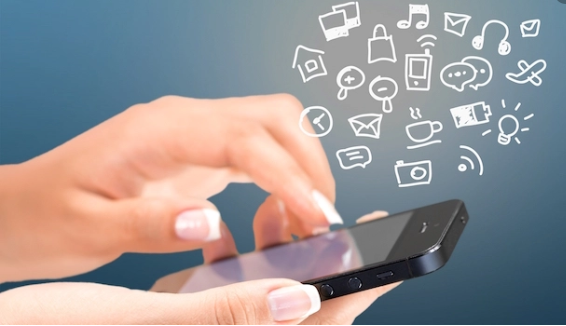
The next generation of smartphones will be context-aware, taking advantage of the growing availability of embedded physical sensors and data exchange abilities. One of the main features applying to this is that phones will start keeping track of users’ personal data, and adapt to anticipate the information will need. All-new applications will come out with the new phones, one of which is an X-ray device that reveals information about any location at which the phone is pointed. Companies are developing software to take advantage of more accurate location-sensing data. This has been described as making the phone a virtual mouse able to click the real world.[c An example would be pointing the phone’s camera at a building while having the live feed open, and the phone will show text with the image of the building, and save its location for use in the future. Omnitouch is a device via which apps can be viewed and used on a hand, arm, wall, desk, or any other everyday surface. The device uses a sensor touch interface, which enables the user to access all the functions through the use of the touch of a finger. It was developed at carnegie mellon un iversity. This device uses a projector and camera worn on the user’s shoulder, with no controls other than the user’s fingers.

4G Technology

4G is the current mainstream cellular service offered to cell phone users, performance roughly 10 times faster than 3G service. One of the most important features in the 4G mobile networks is the domination of high-speed packet transmissions or burst traffic in the channels. The same codes used in the 2G-3G networks are applied to 4G mobile or wireless networks, the detection of very short bursts will be a serious problem due to their very poor partial correlation properties. Recent study has indicated that traditional multilayer network architecture based on the Open system interconnection (OSI) model may not be well suited for 4G mobile network, where transactions of short packets will be the major part of the traffic in the channels. As the packets from different mobiles carry completely different channel characteristics, the receiver should execute all necessary algorithm, such as channel estimation, interactions with all upper layers and so on, within a very short period of time

Featured

Mobile phone generations

In the early 1980s, 1G was introduced as voice-only communication via “brick phones”. Later in 1991, the development of 2G introduced Short message service (SMS) and multimedia massaging service (MMS) capabilities, allowing picture messages to be sent and received between phones. In 1998, 3G was introduced to provide faster data-transmission speeds to support video calling and internet access. 4G was released in 2008 to support more demanding services such as Gamming service, HD Mobile TV video confercing, and 3D TV. 5g technology has been planned for the upcoming future.

Mobile technolgy

Mobile technology is the technology used for Cellular commumnication. Mobile code-division multiple access (CDMA) technology has evolved rapidly over the past few years. Since the start of this millennium, a standard mobile device has gone from being no more than a simple two-way pager to being a mobile phone, GPS Nevigation device, an embedded web browser and instant messaging client, and a handhelb gaming console. Many experts believe that the future of computer technology rests in mobile computing with wireless networking. Mobile computing by way of tablet computers are becoming more popular. Tablets are available on the 3G and 4G networks.

History of computer technology

 zuse Z3 replication display at deutsches mueseumin munich. The Zuse Z3 is the first programmable computer.Main article: History of computing hardware. Devices have been used to aid computation for thousands of years, probably initially in the form of a tally stick. The Antikythera mechanism, dating from about the beginning of the first century BC, is generally considered to be the earliest known mechanical analog computer, and the earliest known geared mechanism. Comparable geared devices did not emerge in Europe until the 16th century, and it was not until 1645 that the first mechanical calculator capable of performing the four basic arithmetical operations was developed.  using either relays or valves, began to appear in the early 1940s. The completed in 1941, was the world’s first programmable computer, and by modern standards one of the first machines that could be considered a complete computing machine. colosus, developed during the Second World War to decrypt messages, was the first electronic device computer. Although it was programmable, it was not general-purpose, being designed to perform only a single task. It also lacked the ability to store its program in memory; programming was carried out using plugs and switches to alter the internal wiring. The first recognisably modern electronic digital computer was the manchester baby, which ran its first program on 21 June 1948.[

The development of transistors in the late 1940s at bell laboratories allowed a new generation of computers to be designed with greatly reduced power consumption. The first commercially available stored-program computer, the ferraNti mark I, contained 4050 valves and had a power consumption of 25 kilowatts. By comparison the first transistorised computer, developed at the University of Manchester and operational by November 1953, consumed only 150 watts in its final version

computer

computer is a device that can be instructed to carry out Sequeces of Arithmatic or logital operations automatically via computer programming. Modern computers have the ability to follow generalized sets of operations, called programs. These programs enable computers to perform an extremely wide range of tasks.

Computers are used as control systems for a wide variety of industrial and consumer devices. This includes simple special purpose devices like microwave ownes and remote controls, factory devices such as industrial robots and computer-aided device, and also general purpose devices like personnel computer and mobile devices such as smartphones.

Early computers were only conceived as calculating devices. Since ancient times, simple manual devices like the saided people in doing calculations. Early in the industrial revoluation, some mechanical devices were built to automate long tedious tasks, such as guiding patterns for looms. More sophisticated electrical machines did specialized analog calculations in the early 20th century. The first digital electronic calculating machines were developed during world war II. The speed, power, and versatility of computers have been increasing dramatically ever since then.

Experience the joy of happiness

The joy of happiness is somewhat convoluted, I know. Isn’t joy basically being happy? Yes it is, and I’m joyful about it. Writing has been such a release of stress and an outlet for my creativity, and it has lead me to be joyful for my happiness. I’ve been happy, but now I understand that one of the biggest contributions to that happiness has been my joy of writing. With this knowledge, I’m now experiencing why I’m happy.

I’ll never stop writing and publishing. It’s almost meditative for me.

The start of a new journey

I’m setting off on a journey to understand various cultures throughout the world. During this time, I hope to gain empathy and insight into how the world is seen differently by each culture. I will most certainly encounter perils and challenges that will cause great trepidation, but with love, I will overcome. My worry is the final symbolic moment where I might hope to be reborn with fresh new insights and experiences. But my greater dread is the possibility that the point of rebirth may not come at all. I will keep my eyes wide, take in all that I can, and throw caution to the wind.